

Urge Surfing: Simple Tool People Use to Ride Out Cravings
Urge Surfing Worksheet: The Surprisingly Simple Tool People Use to Ride Out Cravings
Cravings and intense urges can feel like they’re going to last forever, but research suggests they often peak and fade within about 20–30 minutes if you don’t act on them. That’s exactly the idea behind the Urge Surfing Technique, and an urge surfing worksheet gives you a concrete way to practice it when your brain feels anything but calm. In this article, we’ll break down what these worksheets are, how they’re used in addiction recovery, and the real pros and cons of using them as part of your self-help or therapy toolkit—without making any medical claims or promising miracles.
Key Takeaways
| Question | Short Answer |
|---|---|
| What is an urge surfing worksheet? | A guided page or packet that walks you through noticing, tracking, and “riding out” urges (like cravings or impulses) using mindfulness and emotional regulation skills. |
| How is it used in addiction recovery? | Often, a Substance Use Worksheet or Sobriety Worksheet to help people record triggers, bodily sensations, and coping steps instead of acting on urges. |
| Is there a ready-made toolkit? | Yes, the Urge Surfing & Substance Use Toolkit: Recovery & Regulation offers guided worksheets, mindfulness scripts, and crisis prompts. |
| Do I need to be in therapy to use one? | No, many people use them on their own, but some prefer to work through them with a therapist, especially if urges feel overwhelming. |
| Are urge surfing worksheets only for substances? | No, they’re also used for behaviors like gambling, scrolling, bingeing, or self-harm urges, and can be blended into a broader crisis protocol. |
| Where can I find more tools like this? | You can browse a wide range of related therapy tools in the therapy best-sellers collection or search by topic via the shop’s search page. |
| Can urge surfing replace professional help? | No. An urge surfing worksheet is an addiction aid or self-help support, not a substitute for professional care or emergency services. |
1. What Is an Urge Surfing Worksheet, Really?
An urge surfing worksheet turns a simple mindfulness idea into something you can actually do on paper (or screen) when a craving hits. Instead of fighting the urge or giving into it, you “surf” it by observing it rise, peak, and fall, like a wave.
The Urge Surfing & Substance Use Toolkit: Recovery & Regulation describes this as a “gentle, evidence-based way to manage cravings, impulses, and overwhelming urges without acting on them.” It includes guided prompts, body-awareness check-ins, and reflection questions to capture what your mind and body do as the urge passes.

Core elements that most urge surfing worksheets include
- A quick explanation of the Urge Surfing Technique
- Space to rate the urge intensity over time
- Prompts to notice body sensations, emotions, and thoughts
- Mindfulness cues or mindfulness scripts to read or follow
- Reflection questions (“What helped the most?” “What made it harder?”)
In short, it’s a structured way to pause, stay present, and see that urges change - without pretending they’re easy or harmless.
2. How Urge Surfing Worksheets Support Addiction Recovery
In addiction recovery, cravings are expected. A worksheet gives you a plan for what to actually do in those moments. It turns a vague idea (“just ride it out”) into specific steps: pause, notice, breathe, write, reflect.
The Urge Surfing & Substance Use Toolkit (priced at $4.45) frames this as a mix of Substance Use Worksheets, crisis prompts, and emotional regulation supports. It’s designed to be used both between sessions and in-session, so you can build the skill in real time, not only when you feel calm.

Pros for addiction recovery
- Concrete structure: When your brain is foggy, a clear step-by-step page is easier than trying to remember a whole skill.
- Tracking progress: Seeing that a 9/10 craving actually dropped over 20 minutes can boost confidence in your coping skills.
- Flexible use: Works for alcohol, drugs, and also behavioral impulses (scrolling, gambling, bingeing, etc.).
Cons to keep in mind
- In very intense crises, you might not feel able to sit and write.
- Some people feel “homework” resistance and need a more conversational approach.
- On its own, a worksheet is an addiction aid, not a full recovery plan.
3. Key Pros of Using an Urge Surfing Worksheet
Let’s zoom in on the upsides. A lot of people like urge surfing worksheets because they’re low-pressure, low-cost, and easy to customize. They’re a gentle introduction to mindfulness without asking you to meditate for long periods.
They also fit nicely with other tools like Sobriety Worksheets, reflection flashcards, and DBT or ACT-based materials, so you can build a small “toolkit” rather than depending on one single strategy.

Biggest advantages
- Builds awareness: You start to see patterns in your triggers, thoughts, and body signals.
- Supports emotional regulation: The act of slowing down and writing can itself reduce intensity for some people.
- Portable and repeatable: You can print pages or save PDFs and use the same structure whenever you need.
- Integrates with other skills: Fits well alongside DBT, ACT, and trauma-informed tools.
Why mindfulness matters here
Many urge-surfing tools are based on mindfulness ideas. Across multiple randomized trials, mindfulness-based approaches show a real, though varied, effect on cravings and urges, which is why you see so many mindfulness scripts baked into these worksheets.
4. Common Drawbacks and Limitations of Urge Surfing Worksheets
No tool is perfect, and urge surfing worksheets are no exception. They can feel too “worksheet-y” for some people, especially if you’re burnt out on paperwork or school-style tasks.
They also rely on at least a little bit of focus and safety. If you’re in a situation that feels dangerous or extremely overwhelming, it may be hard—or not appropriate—to pull out a pen and start tracking the intensity of your urges.

Potential cons
- Not always usable in emergencies: They’re better as part of a planned crisis protocol than as your only safety step.
- One-size-fits-all formatting: Some worksheets may not match your learning style, literacy level, or cultural background.
- Can feel repetitive: If you’re using them daily, you may feel like you’re writing the same story over and over.
Who might struggle with them?
- People who dislike writing or have difficulties with reading and writing.
- Folks who feel pressured or judged by their own written words.
- Anyone hoping for a quick fix rather than a practice they revisit over time.
5. Urge Surfing Worksheets as Part of a Crisis Protocol
Urge surfing can absolutely sit inside a broader crisis protocol, but it’s usually not the only step. Think of it as one piece of a safety plan that might also include support contacts, grounding skills, and removing access to substances or other risk items.
The Crisis Safety Worksheets: Risk Assessment & Prevention (around $8.25) are an example of a structured safety planning pack that can sit alongside urge surfing tools. They include trigger identification, STOP/PAUSE skills, mood tracking, and a formal safety plan template that can be used with or without a therapist.

How urge surfing fits into a safety plan
- As a step after “pause” and “ground” but before acting on an urge.
- As a way to log what made the crisis better or worse for future planning.
- As part of a Sobriety Worksheet pack where you track days, triggers, and supports.
For more intensive safety planning, the Crisis Safety Plan Bundle: Suicide Assessment & More (listed at about $19.03) adds a 42-page safety booklet, 148 trauma coping cards, and more, giving you a larger set of tools that can work together with urge surfing practice.

6. Using Urge Surfing Worksheets with DBT Emotional Regulation Skills
Dialectical Behavior Therapy (DBT) is well-known for its practical, skill-based approach, especially around emotional regulation and distress tolerance. Urge surfing fits naturally into these modules and often appears in DBT-style workbooks.
The DBT Emotional Regulation Toolkit: Worksheets & Skills (about $5.06) specifically mentions including urge surfing, opposite action, and ABC/PLEASE skills, along with 68 affirmation flashcards and 32 prompts. That makes it a strong companion to any stand-alone urge surfing worksheet.

Pros of combining DBT + urge surfing
- Broader skill set: If urge surfing isn’t working in a given moment, you still have other DBT tools to lean on.
- Structured practice: DBT workbooks make it clear when to use which skill, including urge surfing.
- Affirmation support: Having affirmations can soften the inner critic that shows up during cravings.
DBT-style materials often encourage experimenting—trying urge surfing on different urges and noticing where it fits best. That experimentation mindset can make the practice feel less like a test and more like a curious experiment.

7. ACT, Values, and Urge Surfing: A Helpful Combo
Acceptance and Commitment Therapy (ACT) also plays well with urge surfing. ACT focuses on accepting uncomfortable experiences, defusing from thoughts, and moving toward your values—which is exactly what many people are trying to do when they resist a craving.
The ACT Toolbox: Worksheets Bundle for Adults and Children (around $28.00) includes ACT worksheets, 250 flashcards, journaling prompts, and values exploration tools. You can pair urge surfing practice with questions like “What value am I protecting by riding this urge?” or “What small action moves me toward my values after the wave passes?”


Why ACT + urge surfing can work well together
- Values anchor: When a craving feels pointless to resist, values give you a “why.”
- Mindfulness overlap: ACT uses present-moment awareness, similar to the Urge Surfing Technique.
- Flexibility focus: ACT centers on psychological flexibility, which is handy when urges surprise you.


8. Trauma, Parts Work, and Urge Surfing
For many people, urges are tangled up with trauma responses and “parts” of themselves that learned to cope in intense situations. In those cases, an urge surfing worksheet can be a gentle way to notice: which part of me is having this urge?
The Trauma Mega Bundle: Worksheets, Scripts & Safety Plan (around $69.05) brings together trauma worksheets, polyvagal theory resources, EMDR scripts, and crisis tools. While it’s not an urge-surfing-only pack, its focus on the nervous system and safety can support the same self-observation skills that urge surfing relies on.


Internal Family Systems (IFS) & parts work
If you’re curious about “parts” language—like protectors, exiles, firefighters—an IFS-flavored approach can complement urge surfing. Instead of just rating an urge 1–10, you can also gently ask which part is activated and what it’s trying to protect you from.
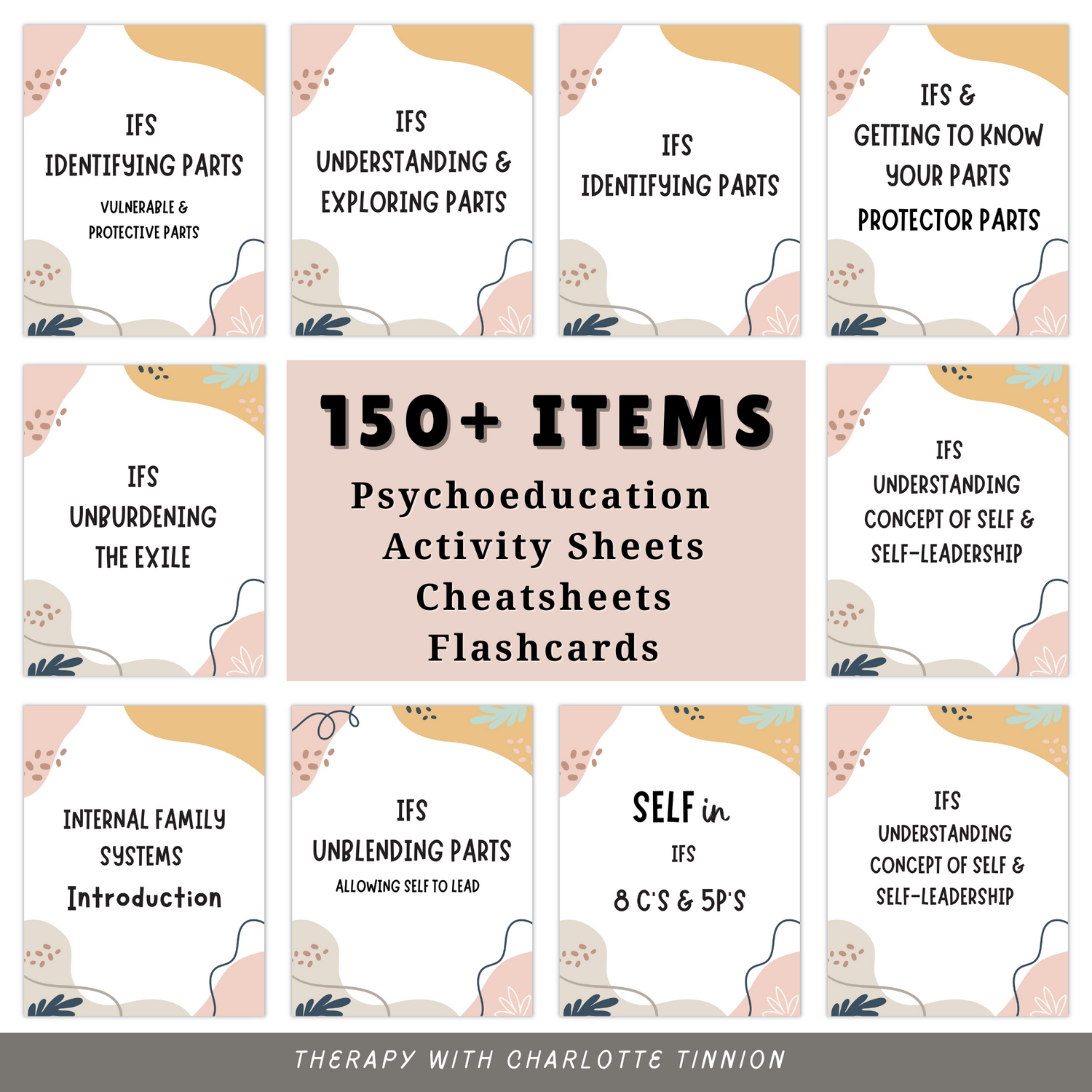
To explore that style of thinking, there’s a dedicated blog on IFS you can check out: A Beginner’s Guide to Internal Family Systems (IFS). Pairing that perspective with an urge surfing worksheet can help you respond to urges with more curiosity and less self-blame.


9. Kids, Teens, and Age-Appropriate Urge Surfing Tools
For kids and teens, urge surfing needs to be extra-simple, visual, and concrete. Instead of long written prompts, younger folks often do better with pictures, stories, and checkboxes that explain urges and feelings in a friendly way.
The Kids Trauma Workbook: Narrative Therapy & Safety Plan (around $11.43) is a 55-page, child-friendly resource that focuses on narrative therapy, safety plans, emotion tracking, and coping skills. While it’s not marketed as a pure urge surfing worksheet, many of the same ideas—naming feelings, watching them change, and choosing safe actions—are built into its activities.


Adapting urge surfing for younger people
- Use pictures of waves and thermometers instead of number scales.
- Keep instructions short: “Notice – Breathe – Wait – Choose.”
- Invite drawing or coloring sensations rather than writing about them.
Adults supporting kids (parents, school counselors, child therapists) can bring the same core idea—urges rise and fall—into language that fits the child’s age and context.


10. Flashcards, Reflections, and Other Supports Around Urge Surfing
If you like the idea of urge surfing but aren’t a huge fan of full-page worksheets, smaller tools can give you similar benefits. Flashcards, short prompts, and mini reflection sheets are easier to grab in the moment.
The Sobriety Affirmation Flashcards: Addiction & Recovery Support (around $4.13) include 18–24 affirmation and reflection cards plus journaling prompts. You can pair them with an urge surfing worksheet by pulling a card after you ride out an urge and jotting a quick note about how you feel now versus at the peak.


Pros of pairing flashcards with worksheets
- Quicker access: Flashcards are easy to grab when you don’t feel like writing a lot.
- Positive reinforcement: Affirmations can soften shame and self-criticism after a tough urge.
- Layered support: You can use a card before, during, or after a worksheet to guide your focus.
Over time, many people end up mixing and matching: sometimes a full urge surfing worksheet, sometimes a quick note in a journal, sometimes a card pull and mindful breath. The point isn’t to use all the tools perfectly, but to have enough options that something feels doable on a hard day.


Conclusion
An urge surfing worksheet is a simple, practical way to practice riding out cravings and urges instead of reacting to them. Used on its own, it’s a helpful addiction aid and sobriety worksheet for building awareness and emotional regulation; combined with DBT, ACT, trauma tools, and a clear crisis protocol, it becomes part of a fuller support system.
It’s not a magic bullet, and it doesn’t replace professional care, but it can give you something concrete to reach for in the minutes that matter most. Whether you lean toward full-page worksheets, ACT and DBT toolkits, or quick affirmation cards, the core skill is the same: notice the wave, stay with it, and let it pass—one urge at a time.